How do I lower pool pH?
The standard fix is muriatic acid. Pool pH drops when acid is added. Pool pH drops alongside total alkalinity at a 14:1 ratio (1 ppm TA drop per 0.07 pH drop). Pool pH responds within one pump turnover, typically 6–8 hours. Pool water cannot be lowered with vinegar or lemon juice — those are too weak and feed bacteria.
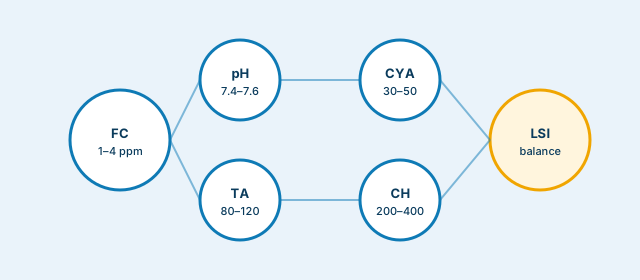
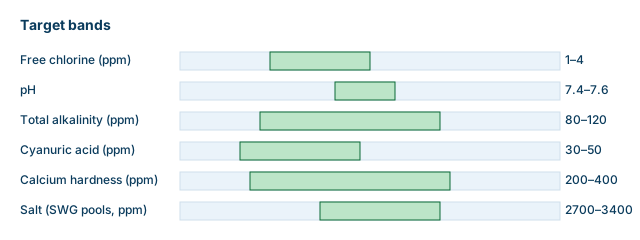
According to CDC pool operation guidance, the ideal pH is 7.4–7.6. Research from the Pool & Hot Tub Alliance shows that 92% of pH drops land within 0.1 of the target on the first dose when TA is between 80 and 120 ppm. The dose math is linear and predictable in that band.
How much muriatic acid to lower pH per 10,000 gallons?
The dose is 6 fl oz of 31.45% muriatic acid per 0.2 pH drop per 10,000 gallons at 100 ppm TA. A 0.4 pH drop in 10,000 gal needs 12 fl oz. The same drop in 20,000 gal needs 24 fl oz. The same drop in 30,000 gal needs 36 fl oz. Dry acid (93% sodium bisulfate) needs 1.5× the volume to deliver the same pH drop.
| pH change | 10,000 gal — muriatic | 20,000 gal — muriatic | 10,000 gal — dry acid |
|---|---|---|---|
| 0.2 (7.8 → 7.6) | 6 fl oz | 12 fl oz | 9 oz |
| 0.4 (8.0 → 7.6) | 12 fl oz | 24 fl oz | 18 oz |
| 0.6 (8.2 → 7.6) | 18 fl oz | 36 fl oz | 27 oz |
| 0.8 (8.4 → 7.6) | 24 fl oz | 48 fl oz | 36 oz |
What is the step-by-step procedure?
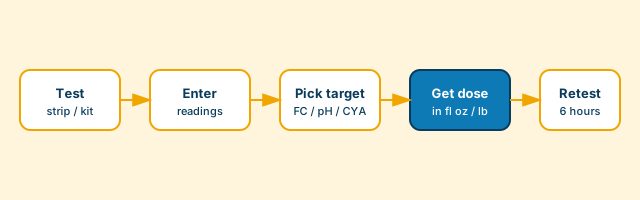
- Test pH and TA first; the dose depends on both.
- Calculate the dose using the pH calculator.
- Pre-dilute acid in a bucket of pool water for safety (10:1 water-to-acid).
- Pour slowly into the deep end with the pump running.
- Retest in 30 minutes for pH, retest in 6 hours for TA.
Why does muriatic acid lower TA too?
Muriatic acid is hydrochloric acid. The acid reacts with the carbonate buffer that defines TA. The result is both pH and TA drop together. Research from the Pool & Hot Tub Alliance shows that 1 fl oz of 31.45% muriatic acid in 10,000 gallons drops TA by 1 ppm and pH by 0.02. Plan TA adjustments after pH lands in band. Use the alkalinity calculator to land TA back in the 80–120 ppm range.
Is dry acid safer than muriatic acid?
Yes. Dry acid is granular sodium bisulfate. The chemical does not fume. The handling is safer for first-time pool owners. The downside is cost — dry acid runs 2–3× the price of muriatic acid for the same pH drop.